
Why ovulation testing shouldn’t disrupt your day

Our founder tested ovulation during a coffee date with a friend recently. A simple reminder that fertility care can fit naturally into your everyday life.
The time to test is the time that works for you. Fertility care should be flexible, not fixed.
For many people trying to conceive or beginning to understand their cycle, ovulation testing can feel like one more thing you “have to get right.” But here’s the truth: your body doesn’t operate on exact-minute scheduling, and neither should your fertility tools.
One of the most common questions people ask when searching for guidance is “When is the best time to take an ovulation test?”
The answer is simple: anytime between 10am and 10pm.
This broad window matters because fertility care should feel supportive, not stressful. Your ovulation test should fit into your day. Whether you’re working, on holidays, caring for children, studying, or simply trying to keep up with life. Testing shouldn’t disrupt your rhythm.
Before we dive in, pause and ask yourself:
Where in my day do I naturally pause?
Is there a time between 10am–10pm that already feels calm and comfortable?
What would help this feel gentler rather than rushed?
Your testing routine can be shaped around these answers.
Understanding Luteinising Hormone and why timing matters
To feel confident in your testing window, it helps to understand what’s happening within your body.
Luteinising Hormone (LH) is released by the pituitary gland and plays a central role in triggering ovulation. In the days before ovulation, LH begins to rise gradually. When your ovulation test shows a positive result, it's reflecting this LH surge, a signal that ovulation is likely to occur within the next 24–36 hours.
What many people don’t realise is that this rise doesn’t happen in a single moment. It unfolds over hours, sometimes across parts of the day. Timing matters, but not in a strict or minute-by-minute way. Your hormones simply don’t operate on that schedule.
LH also becomes easier to detect in urine from late morning onwards. This gives the hormone time to move from the bloodstream into the urine, where ovulation tests can pick it up more reliably. That's why most medical and diagnostic organisations recommend testing between 10am and 10pm, a window that offers consistency without pressure. The bébé bloom Ovulation Test is TGA-registered in Australia (ARTG 351757) and designed to fit into your day, not take it over.
To understand how the bébé bloom Ovulation Test measures your LH level as a numerical value rather than a positive or negative result, read What is a semiquantitative ovulation test and why does the number actually matter?
Testing shouldn’t take over your day
For many people trying to conceive, stress comes from believing the test must be taken at the exact same time, or that being late by one hour could alter everything.
Remember, LH rises gradually, not in sudden spikes. Your ovulation test is simply capturing a pattern that unfolds over time, not a fragile moment that disappears if you blink.
This means:
You don’t need to test at 10:00am sharp
You don’t need to rearrange your day
You don’t need to feel guilty if you forget and test later
Your fertility care should be steady and supportive, not stressful.
Real-life examples of stress-free testing
Everyone’s day looks different. Your testing routine can adapt to yours.
If you work full time
Many people find it easiest to test during a natural pause in their workday, such as:
a mid-morning break
lunchtime
before leaving work in the afternoon
LH remains readily detectable through these times, making each of these moments effective and reliable.
If you’re at home with children
Look for a moment when the household naturally softens such as after school pick-up, during quiet play, or early evening. You don’t need a special ritual; just a calm minute to check in (and yep we know, even these moments are often hard to come by ;).
If you work shifts or have an unpredictable routine
Shift workers, carers, students, hospitality teams: your schedule may change daily. The 10am–10pm window gives you full permission to adapt. Your body doesn’t mind if today’s test is at 11am and tomorrow’s is at 4pm. Consistency within the window is what matters, not matching the exact same minute each day.
If you tend to forget
Pair your ovulation test with something you already do:
making a cup of tea
washing your hands after arriving home
preparing dinner
This kind of “habit stacking” takes pressure away and makes testing feel natural and predictable.
If you’re travelling or on holiday
If you're overseas or between time zones, simply use the departure timezone of your home country to guide your testing window.
This keeps your routine steady, even when your surroundings change. Whether you’re relaxing by a pool, exploring somewhere new, or adjusting to jet lag, your 10am–10pm window stays anchored to your original timezone, keeping things simple, grounded, and stress-free.
Reframing ovulation testing
Your ovulation test is not a test of how “successful” your TTC journey is. Nor is it an exam. It is simply information, a small window into your body’s rhythm.
When you learn that:
LH rises gradually
ovulation follows the surge in a broad timeframe, and
your testing window is flexible,
you can release some of the urgency that makes fertility care feel overwhelming.
Instead, ovulation testing becomes:
a moment of connection and clarity
a gentle check-in
a supportive part of your routine
Testing should fit into your day, at a time that supports you.
If you are choosing between different types of ovulation tests available in Australia, read The most accurate ovulation tests available in Australia and how to choose.
With love 💛
Fatima & Sara xx
Founders of bébé bloom
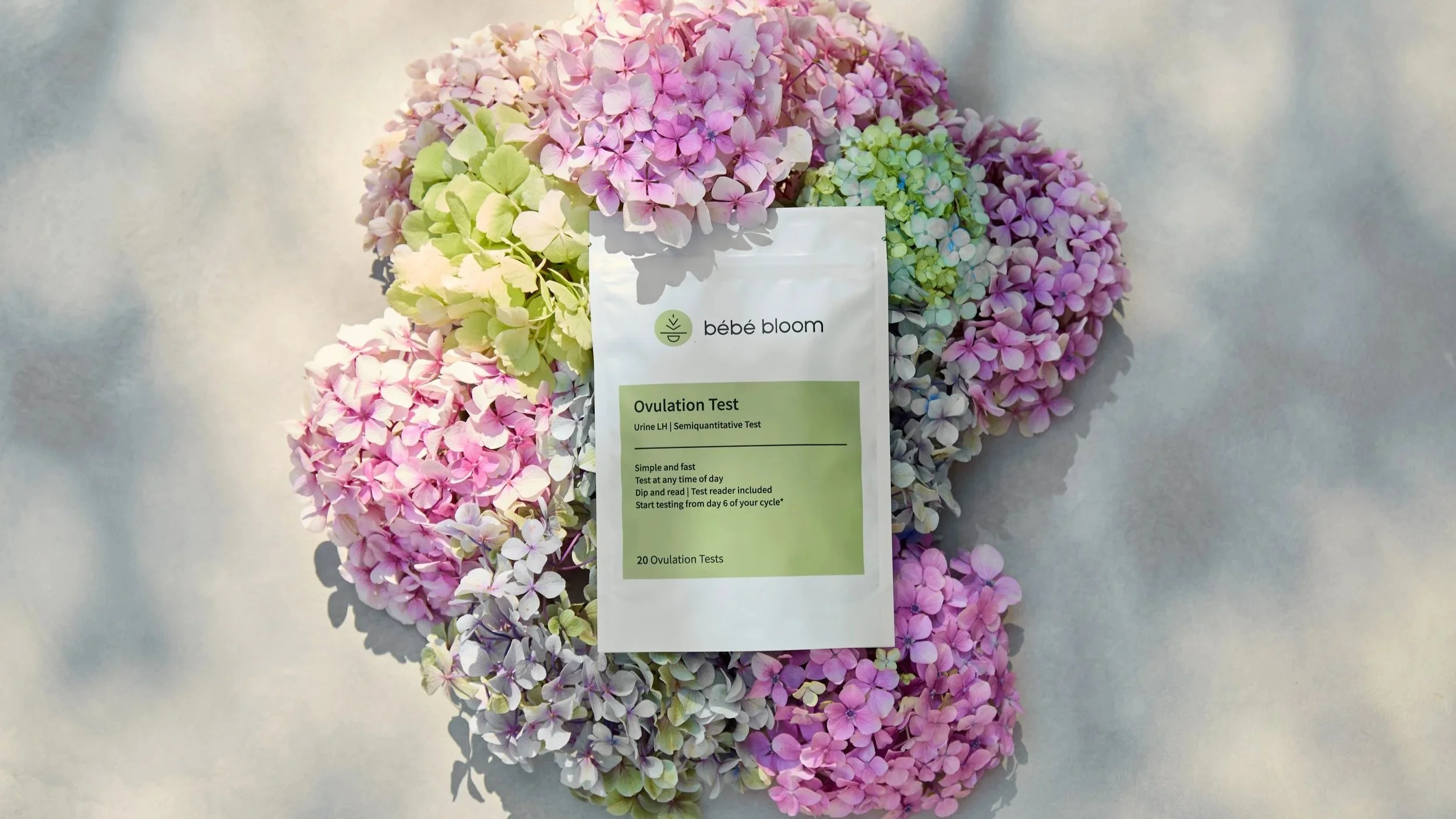
bébé bloom Ovulation Test kit
Shop ovulation tests: Explore our eco-friendlier, TGA-registered ovulation tests designed for real-life routines.
Disclaimer: This blog is intended for informational purposes only and does not constitute medical advice. Always consult a qualified healthcare professional for personalised guidance regarding your fertility, reproductive health, or use of diagnostic tools.
