
 Image 1 of 15
 Image 2 of 15
 Image 3 of 15
 Image 4 of 15
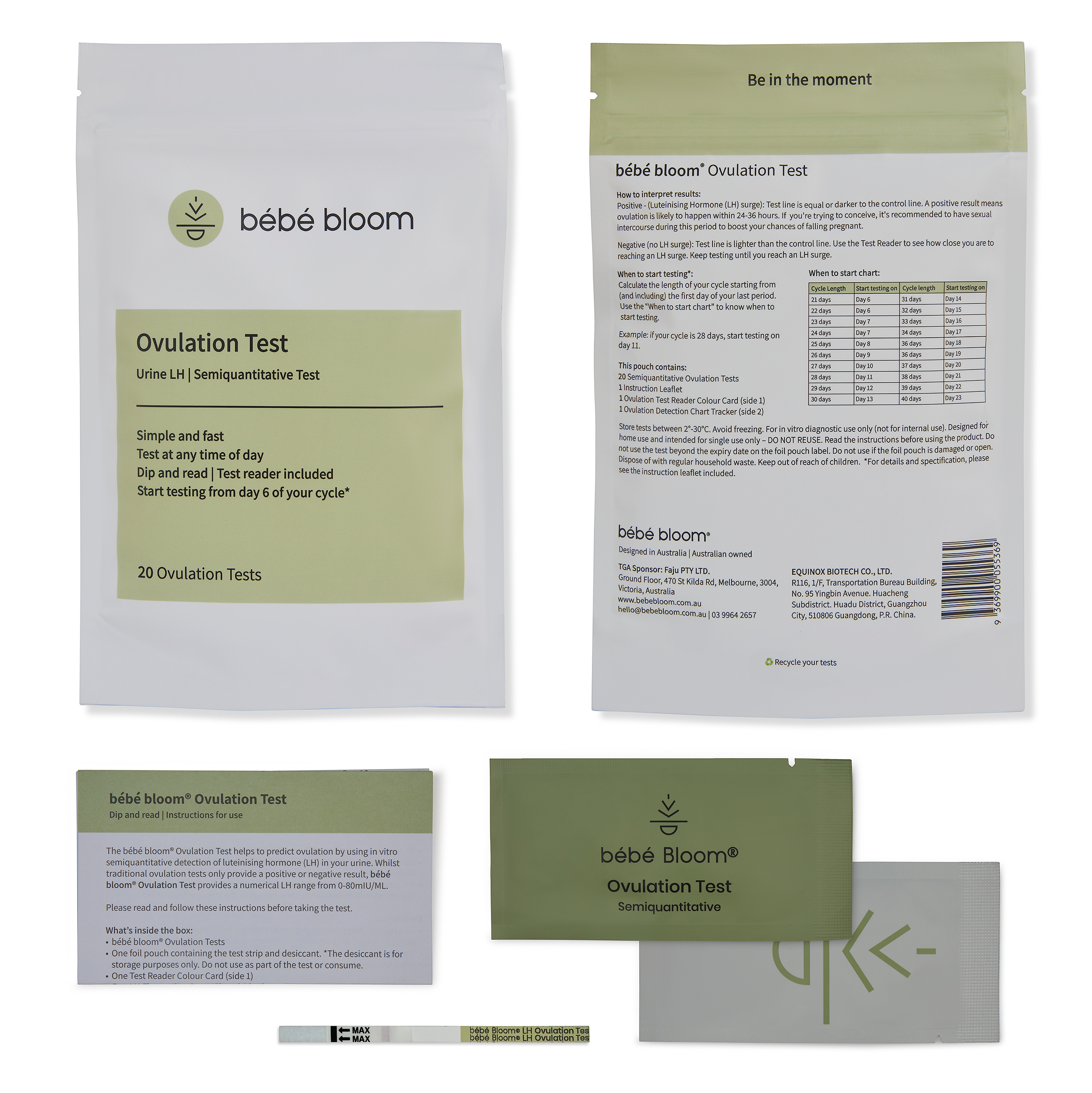 Image 5 of 15
 Image 6 of 15
 Image 7 of 15
 Image 8 of 15
 Image 9 of 15
 Image 10 of 15
 Image 11 of 15
 Image 12 of 15
 Image 13 of 15
 Image 14 of 15
 Image 15 of 15
Why choose our Ovulation Tests?
Pinpoint your two most fertile days each cycle
Tracks your LH surge with a numerical reading, not just a line
Includes Test Reader Colour Card and Cycle Tracking Guide
20 tests per kit — dip and read
How to use our Ovulation Tests (dip & read strips)
Collect urine in a clean, dry container
Test between 10am and 10pm — avoid first morning urine for ovulation tests
Dip the strip into the urine for 10 seconds, up to the indicated line.
Lay the strip flat on a clean surface
Wait 5 minutes, then compare the test line to the control line using the colour guide
Use the Test Reader Colour Card to see your exact LH level on the 0–80 mIU/mL scale
bébé bloom ovulation and pregnancy tests are TGA-approved medical devices and listed on the Australian Register of Therapeutic Goods (ARTG 351757). TGA sponsor: Faju Pty Ltd.
Frequently asked questions
-
Your LH (luteinising hormone) rises sharply 24–36 hours before you ovulate, that's your surge.
Our test detects this rise in your urine and gives you a numerical LH reading on a scale of 0–80 mIU/mL, so you can see your hormone climbing in real time, not just get a yes or no.
The two days around your surge are your most fertile days. -
Check the When to Start Chart included in your kit. It covers cycle lengths from 21 to 40 days. If your cycle is 21 days or shorter, start testing from day 5. If it's longer than 40 days, start testing 17 days before you expect your next period.
-
Anytime between 10am and 10pm works. Try to test at roughly the same time each day, and avoid urinating for at least four hours beforehand. This keeps your LH concentration accurate.
-
No — that's one of the advantages of a semiquantitative test.
Instead of comparing lines, you use the Test Reader Colour Card to find your numerical LH value on the 0–80 mIU/mL scale found in your kit. -
Test once a day for at least five days, or until you detect your LH surge. Once your reading rises or the test line darkens past the control line, increase to every four hours (or at minimum twice a day — morning and evening) to catch your peak precisely.
-
No. Once you've detected your LH surge, you can stop. Save any remaining tests for your next cycle.
-
Ovulation typically follows within 24–48 hours of your surge. This window, and the day after ovulation, is your most fertile time.
We recommend trying to conceive within this period. -
Ovulation usually occurs after the last day your peak reading is detected. If you see multiple peaks, go with the final one.
-
Conception involves many factors beyond timing, and it often takes longer than expected, even when you're doing everything right.
If you're under 35 and have been trying for 12 months, or over 35 and trying for 6 months, it's worth speaking with your doctor.
If you're over 40, we'd encourage you to reach out to your doctor sooner to explore your options. -
A few things could be at play: your surge may have been brief and occurred between tests, your LH levels may be lower than the detectable threshold, or you may not have ovulated this cycle — which isn't uncommon.
It can help to watch for other natural signs alongside testing. Around ovulation, many people notice cervical mucus becoming clearer and more stretchy — similar to raw egg white. You may also see a small rise in your basal body temperature (BBT) the day after ovulation occurs. These signs, used alongside your numerical LH readings, give you a more complete picture of your cycle.
If you don't detect a surge for three consecutive cycles, it's worth checking in with your doctor.
-
Your results won't be inaccurate, but your hormone patterns can take time to settle after stopping the pill or other hormonal contraception.
For the most reliable testing window, it can help to wait until you've had two natural cycles and noted their length before you start using ovulation tests.
-
Most common medications, including pain relief and antibiotics, don't affect the test. If you're on any medication and getting unexpected results, it's worth discussing with your doctor. For alcohol, we'd suggest avoiding testing right after drinking, just to be safe.
-
Try a bébé bloom Pregnancy Test. Our standard test is over 99% accurate from the day of your expected period, and our Early Detection test can be used up to five days before your expected period. If you get a positive result, book in with your doctor as soon as you can.
-
They measure different things. BBT typically confirms that ovulation has already happened. Our ovulation test tells you that ovulation is about to occur, giving you advance notice so you can time conception. Many people use both together.
-
It can. A large fluid intake before testing may dilute the LH in your urine, making the reading less accurate. Try to limit fluids for around two hours before you collect your sample.
-
Use a glass or plastic container, ensuring the container is dry and clean before testing again.
-
Use a clean, dry glass or plastic container. For the most accurate result, test your urine as soon as you collect it. If you need to store it, urine can be kept at room temperature or refrigerated at 2–8°C for up to 48 hours. If refrigerated, let it come to room temperature for about 20 minutes before testing.
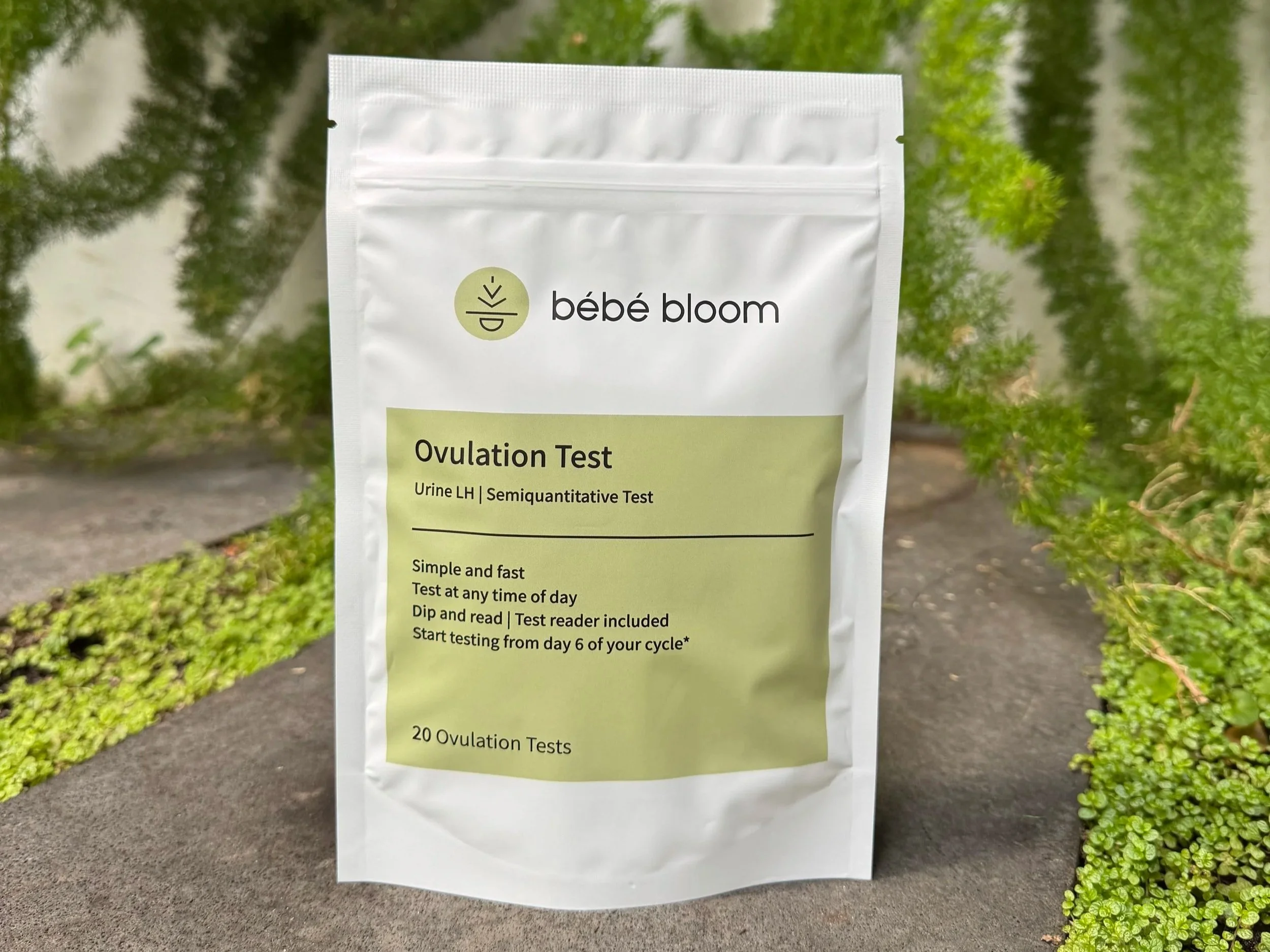


Most ovulation tests give you a positive or a negative. The bébé bloom Ovulation Test gives you a number: a numerical LH value across a range of 0–80 mIU/mL, so you can see your hormone rising before your peak, not just when it arrives. It is TGA-registered in Australia (ARTG 351757). Here is how the different types of ovulation tests compare, and how to choose the one that gives you the most useful information.